

Hey there! As a supplier of Plastic Injection Moulding Machines, I've seen firsthand how crucial mold temperature is when it comes to the quality of products made by these machines. Let's dive into the effects of mold temperature on product quality and why it's something you should pay close attention to.
1. Surface Finish
One of the most obvious effects of mold temperature is on the surface finish of the plastic products. When the mold temperature is too low, the plastic cools down too quickly as it enters the mold cavity. This rapid cooling can lead to a rough or dull surface finish. You might notice things like flow marks, which are lines on the surface of the product that show the path the plastic took as it filled the mold. These flow marks can make the product look unprofessional and reduce its aesthetic appeal.
On the other hand, if the mold temperature is too high, the plastic may become too soft and sticky. This can cause it to stick to the mold walls, resulting in a surface that has a cloudy or hazy appearance. It might also lead to flash, which is excess plastic that seeps out of the mold cavity and forms thin, unwanted edges on the product.

A proper mold temperature, however, allows the plastic to flow smoothly into the mold cavity and solidify evenly. This results in a smooth, glossy surface finish that looks great and meets the high - quality standards you expect. For example, in the production of high - end consumer electronics casings, a perfect surface finish is essential, and controlling the mold temperature is key to achieving this.
2. Dimensional Accuracy
Dimensional accuracy is another critical aspect of product quality, and mold temperature plays a big role here. When the mold temperature is not well - controlled, the plastic will shrink unevenly as it cools. If the temperature is too low, the outer layers of the plastic will cool and shrink faster than the inner layers. This can cause the product to warp or deform, resulting in dimensions that are out of spec.
For instance, if you're making a precision part for a medical device, even a small deviation in dimensions can render the part useless. On the contrary, when the mold temperature is too high, the plastic may expand more than expected during the injection process. As it cools, it will then shrink back, but this expansion and shrinkage cycle can also lead to dimensional inaccuracies.
Maintaining a consistent and appropriate mold temperature ensures that the plastic shrinks uniformly throughout the cooling process. This helps to achieve the exact dimensions specified in the design, whether it's a small, intricate part or a large, complex component.
3. Mechanical Properties
The mechanical properties of plastic products, such as strength, toughness, and flexibility, are also affected by mold temperature. When the mold temperature is low, the plastic molecules have less time to align properly during the cooling process. This can result in a product with lower mechanical strength. The lack of proper molecular alignment means that the internal structure of the plastic is less organized, making it more prone to cracking and breaking under stress.
In contrast, a higher mold temperature allows the plastic molecules to move more freely and align better. This can lead to a product with improved mechanical properties. For example, in the production of automotive parts, which need to withstand high levels of stress and impact, a well - controlled mold temperature can significantly enhance the strength and durability of the parts.
However, if the temperature is too high for too long, the plastic may start to degrade. This degradation can reduce its mechanical properties and make the product more brittle. So, finding the right balance is crucial for optimizing the mechanical performance of the plastic products.
4. Cycle Time
Mold temperature also has a direct impact on the cycle time of the injection molding process. A lower mold temperature generally means faster cooling times. This can reduce the overall cycle time, allowing you to produce more parts in a shorter period. But as we've discussed earlier, a very low temperature can lead to quality issues such as poor surface finish and dimensional inaccuracies.
On the other hand, a higher mold temperature requires more time for the plastic to cool down, which increases the cycle time. While this may seem like a drawback, in some cases, it can be beneficial. For example, when working with high - viscosity plastics, a higher mold temperature can improve the flow of the plastic, resulting in better - quality parts. Even though the cycle time is longer, the improved quality can offset the longer production time.
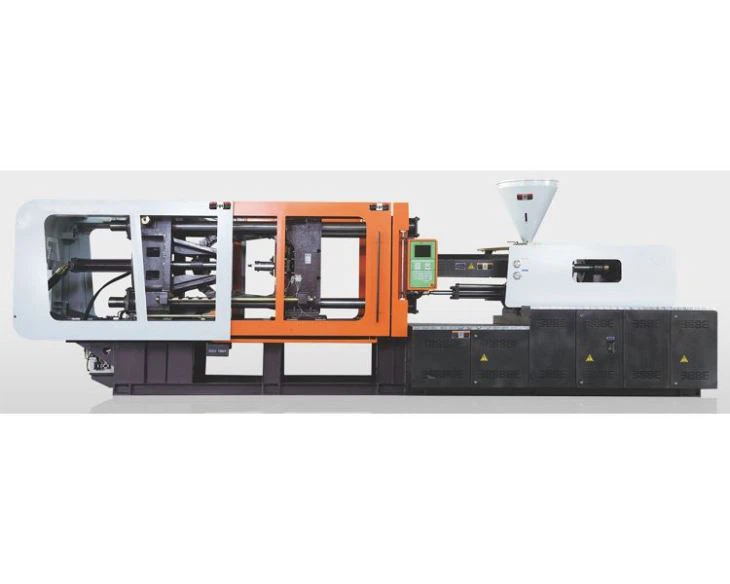
As a Plastic Injection Moulding Machine supplier, we understand that you want to maximize productivity while maintaining high - quality standards. That's why our machines, like the SERVO MOTOR PET Preform Plastic Injection Molding Machine, are designed with advanced temperature control systems. These systems allow you to precisely adjust and maintain the mold temperature, giving you the flexibility to balance cycle time and product quality according to your specific needs.
5. Material Compatibility
Different types of plastics have different optimal mold temperatures. For example, polycarbonate generally requires a higher mold temperature compared to polyethylene. If you don't use the right mold temperature for a particular plastic, it can lead to a host of problems.
If the temperature is too low for a high - temperature plastic, the plastic may not flow properly into the mold cavity, resulting in incomplete filling or voids in the product. On the other hand, if you use a high temperature for a low - temperature plastic, it can cause thermal degradation of the material.
Our company offers a wide range of injection molding machines, including the Injection Machinery for PET Preforms and Customer Design PET Preform Injection Molding Machine. These machines are designed to work with various types of plastics, and our experts can help you determine the best mold temperature settings for your specific material.
Why Choose Our Machines?
We know that choosing the right plastic injection molding machine is a big decision. Our machines are built with state - of - the - art technology to ensure precise temperature control. This not only helps you achieve high - quality products but also reduces waste and increases efficiency.
Our team of experienced technicians is always ready to provide you with support and advice. Whether you're a small - scale manufacturer or a large - scale industrial operation, we can help you find the perfect machine for your needs.
If you're interested in improving the quality of your plastic products and optimizing your injection molding process, we'd love to hear from you. Contact us to discuss your requirements and start a partnership that will take your production to the next level.
References
- "Injection Molding Handbook" by O. Olanipekun and A. O. Akinlabi
- "Plastic Product Design and Development" by S. S. Mahabole
- Industry research reports on plastic injection molding technology