

Mould design plays a pivotal role in the performance of a plastic injection moulding machine. As a supplier of Plastic Injection Moulding Machines, I have witnessed firsthand how the quality and characteristics of mould design can significantly impact the overall efficiency, productivity, and quality of the injection moulding process. In this blog, I will delve into the various aspects of how mould design influences the performance of a plastic injection moulding machine.
1. Filling and Packing Efficiency
The design of the mould directly affects the filling and packing stages of the injection moulding process. A well - designed mould ensures that the molten plastic can flow smoothly into all cavities of the mould. The gate design, for example, is crucial. The location, size, and type of gates determine how the plastic enters the mould cavity. If the gate is too small, it can cause high shear rates, which may lead to material degradation and poor part quality. On the other hand, if the gate is too large, it can result in excessive flash and difficult gate removal.
A proper runner system in the mould is also essential for efficient filling. The runner should have an appropriate cross - sectional area and length to minimize pressure drop and ensure uniform distribution of the molten plastic to all cavities. A poorly designed runner system can cause uneven filling, leading to part defects such as short shots or inconsistent wall thickness.
For instance, in the production of small plastic components, a multi - cavity mould with a well - balanced runner system can significantly improve the filling efficiency. This allows the plastic injection moulding machine to produce multiple parts in a single cycle, increasing the overall productivity. Our Automatic PET Bottle Preform Injection Moulding Machine is designed to work in harmony with well - engineered moulds to ensure optimal filling and packing, resulting in high - quality preforms.
2. Cooling Performance
Cooling is a critical phase in the injection moulding process as it affects the cycle time and the final quality of the plastic parts. The mould design determines how effectively the heat can be removed from the molten plastic. A mould with a well - designed cooling channel system can reduce the cooling time, thereby increasing the production rate.
The layout, diameter, and spacing of the cooling channels are key factors. The cooling channels should be placed as close as possible to the mould cavity to maximize heat transfer. However, they also need to be designed in a way that does not interfere with the structural integrity of the mould. For example, in the case of a thick - walled plastic part, a more complex cooling channel design may be required to ensure uniform cooling and prevent warping.
If the cooling is not uniform, it can lead to internal stresses in the plastic part, which may cause deformation or cracking over time. A well - designed mould for our PET Plastics Injection Molding Machine takes into account the specific cooling requirements of PET materials, ensuring that the parts are cooled efficiently and uniformly, resulting in high - quality PET products.

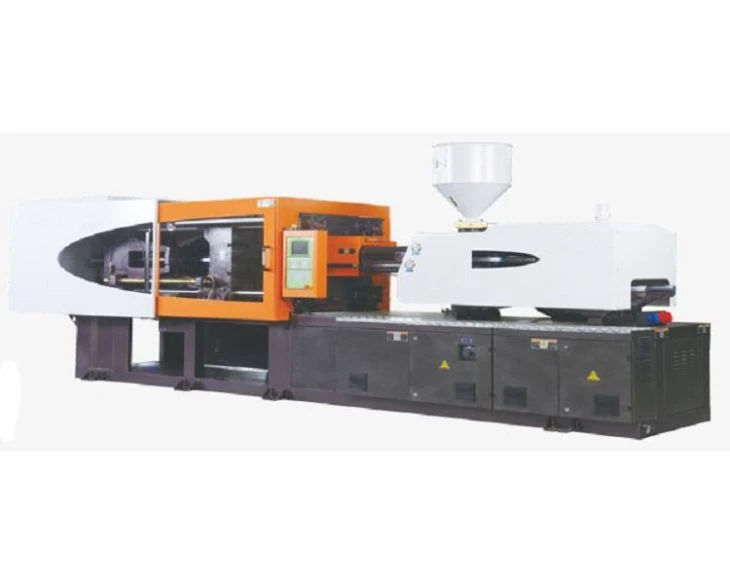
3. Part Ejection
The ease of part ejection is another aspect where mould design has a significant impact on the performance of the plastic injection moulding machine. A well - designed mould should allow for smooth and reliable ejection of the finished parts. This is achieved through proper design of the ejection mechanism, such as ejector pins, sleeves, or stripper plates.
The location and number of ejector pins are crucial. They should be placed in areas where the part has sufficient strength to withstand the ejection force without being damaged. If the ejection mechanism is not properly designed, it can cause part sticking in the mould, leading to production delays and potential damage to the mould and the parts.
For complex - shaped parts, a more sophisticated ejection system may be required. For example, our SERVO MOTOR PET Preform Plastic Injection Molding Machine is often used with moulds that have advanced ejection mechanisms to ensure the smooth removal of preforms, which have a specific shape and require careful handling during ejection.
4. Mould Life and Maintenance
The design of the mould also affects its lifespan and the ease of maintenance. A well - designed mould is made of high - quality materials and has a proper structure to withstand the high pressures and temperatures during the injection moulding process. The choice of materials for the mould, such as tool steel, can impact its durability.
The design should also consider ease of disassembly and reassembly for maintenance purposes. For example, the use of modular components in the mould design allows for easy replacement of worn - out parts. This reduces the downtime of the plastic injection moulding machine and lowers the overall maintenance costs.
A mould with a good surface finish and proper heat treatment can also resist corrosion and wear, extending its service life. This is especially important for high - volume production, where the mould is subjected to repeated use.
5. Part Quality and Precision
The precision of the mould design directly translates into the quality and precision of the plastic parts produced. A high - precision mould can produce parts with tight tolerances, which is crucial for applications where dimensional accuracy is required.
The surface finish of the mould cavity also affects the appearance of the plastic parts. A smooth and defect - free mould surface can result in parts with a high - quality finish, reducing the need for secondary finishing operations.
In industries such as automotive and electronics, where the quality and precision of plastic parts are of utmost importance, a well - designed mould can ensure that the parts meet the strict quality standards. Our plastic injection moulding machines are capable of working with high - precision moulds to produce parts that meet the exact requirements of our customers.
Contact for Purchase and Discussion
If you are interested in learning more about how our plastic injection moulding machines can work in tandem with well - designed moulds to enhance your production process, we invite you to contact us. Our team of experts is ready to assist you in choosing the right machine and provide guidance on mould design for optimal performance. Whether you are looking for a machine for PET preform production or general plastic injection moulding, we have the solutions to meet your needs.
References
- Throne, J. L. (1996). Plastics Rheology and Processing. Marcel Dekker.
- Rosato, D. V., & Rosato, D. V. (2000). Injection Molding Handbook. Kluwer Academic Publishers.
- Osswald, T. A., & Turng, L. - S. (2007). Injection Molding Handbook. Hanser Publishers.